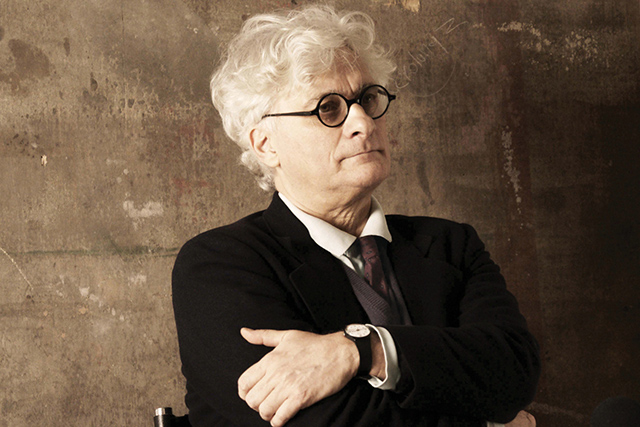
Nor does the society of positivity tolerate negative feelings.
Consequently, one loses the ability to handle suffering and pain, to
give them form. For Nietzsche, the human soul owes its depth,
grandeur, and strength precisely to the time it spends with the
negative. Human spirit is born from pain, too: “That tension of the
soul in unhappiness which cultivates its strength, . . . its inventiveness
and courage in enduring, persevering, interpreting, and
exploiting suffering, and whatever has been granted to it of profundity,
secret, mask, spirit, cunning, greatness—was it not granted
through suffering, through the discipline of great suffering?”
The general consensus of the society of positivity is “Like.” It
is telling that Facebook has consistently refused to introduce a
“Dislike” button. The society of positivity avoids negativity in all
forms because negativity makes communication stall. The value of
communication is measured solely in terms of the quantity of
information and the speed of exchange. The mass of communication
also augments its economic value. Negative judgments impair
communication. Further communication occurs more quickly
following “Like” than “Dislike.” Most importantly, the negativity
that rejection entails cannot be exploited economically.
Transparency is a neoliberal dispositive. It forces everything
inward in order to transform it into information. Under today’s
immaterial relations of production, more information and communication
mean more productivity and acceleration. In contrast,
secrecy, foreignness, and otherness represent obstacles for communication
without borders. They are to be dismantled in the
name of transparency.
Showing posts with label Philosophy. Show all posts
Monday, 11 February 2019
Byung Chul Han: The Transparency Society
Labels:
Byung Chul Han,
Germany,
Philosophy,
The Transparency Society
Wednesday, 7 March 2018
Hito Steyerl: Duty Free Art: Art in the Age of Planetary Civil War
According to the Google N-gram viewer, the usage of the word “impossible” has steeply dropped since around the mid-twentieth century. But what does this tell us? Does it mean that fewer and fewer things are impossible? Does this mean that impossibility “as such” is in historical decline? Perhaps it just means that the conditions for possibilities as such are subject to change over time? Are both the possible and the impossible defined by historical and external conditions?
According to Immanuel Kant, time and space are necessary conditions to perceive or understand anything. Without time and space, knowledge, experience, and vision cannot unfold. Kant calls this perspective “criticism.” With this in mind, what kind of time and space is necessary for contemporary art to become manifest? Or rather: What does criticism about contemporary art say about time and space today?
To brutally summarize a lot of scholarly texts: contemporary art is made possible by neoliberal capital plus the internet, biennials, art fairs, parallel pop-up histories, growing income inequality. Let’s add asymmetric warfare—as one of the reasons for the vast redistribution of wealth—real estate speculation, tax evasion, money laundering, and deregulated financial markets to this list.
To paraphrase philosopher Peter Osborne’s illuminating insights on this topic: contemporary art shows us the lack of a (global) time and space. Moreover, it projects a fictional unity onto a variety of different ideas of time and space, thus providing a common surface where there is none.
Contemporary art thus becomes a proxy for the global commons, for the lack of any common ground, temporality, or space.
It is defined by a proliferation of locations, and a lack of accountability. It works by way of major real estate operations transforming cities worldwide as they reorganize urban space. It is even a space of civil wars that trigger art market booms a decade or so later through the redistribution of wealth by warfare. It takes place on servers and by means of fiber optic infrastructure, and whenever public debt miraculously transforms into private wealth. Contemporary art happens when taxpayers are deluded into believing they are bailing out other sovereign states when in fact they are subsidizing international banks that thus get compensated for pushing high-risk debt onto vulnerable nations. Or when this or that regime decides it needs the PR equivalent of a nip and tuck procedure.
But contemporary art also creates new physical spaces that bypass national sovereignty.
Let me give you a contemporary example: freeport art storage.
This is the mother of all freeport art storage spaces: Geneva freeport, a tax-free zone in Geneva that includes parts of an old freight station and an industrial storage building. The free-trade zone takes up the backyard and the fourth floor of the old storage building, so that different jurisdictions run through one and the same building, as the other floors are set outside the freeport zone. A new art storage space was opened last year. Up until only a few years ago, the freeport wasn’t even officially considered part of Switzerland.
This building is rumored to house thousands of Picassos, but no one knows an exact number since documentation is rather opaque. There is little doubt though that its contents could compete with any very large museum.
Let’s assume that this is one of the most important art spaces in the world right now. It is not only not public, but it is also sitting inside a very interesting geography.
From a legal standpoint, freeport art storage spaces are somewhat extraterritorial. Some are located in the transit zones of airports or in tax-free zones. Keller Easterling describes the free zone as a “fenced enclave for warehousing.” It has now become a primary organ of global urbanism copied and pasted to locations worldwide. It is an example of “extrastatecraft,” as Easterling terms it, within a “mongrel form of exception” beyond the laws of the nation-state. In this deregulatory state of exemption, corporations are privileged at the expense of common citizens, “investors” replace taxpayers, and modules supplant buildings:
[Freeports’] attractions are similar to those offered by offshore financial centres: security and confidentiality, not much scrutiny … and an array of tax advantages … Goods in freeports are technically in transit, even if in reality the ports are used more and more as permanent homes for accumulated wealth.
The freeport is thus a zone for permanent transit. Although it is fixed, does the freeport also define perpetual ephemerality? Is it simply an extraterritorial zone, or is it also a rogue sector carefully settled for financial profitability?
The freeport contains multiple contradictions: it is a zone of terminal impermanence; it is also a zone of legalized extralegality maintained by nation-states trying to emulate failed states as closely as possible by selectively losing control. Thomas Elsaesser once used the term “constructive instability” to describe the aerodynamic properties of fighter jets that gain decisive advantages by navigating at the brink of system failure. They would more or less “fall” or “fail” in the desired direction. This constructive instability is implemented within nation-states by incorporating zones where they “fail” on purpose. Switzerland, for example, contains “245 open customs warehouses,” enclosing zones of legal and administrative exception. Are this state and others a container for different types of jurisdictions that get applied, or rather do not get applied, in relation to the wealth of corporations or individuals? Does this kind of state become a package for opportunistic statelessness? As Elsaesser pointed out, his whole idea of “constructive instability” originated with a discussion of Swiss artists Fischli and Weiss’s work Der Lauf der Dinge (1987). Here all sorts of things are knocked off balance in celebratory collapse. The film’s glorious motto is: “Am schönsten ist das Gleichgewicht, kurz bevor’s zusammenbricht” (Balance is most beautiful just at the point when it is about to collapse).
Among many other things, freeports also become a zone for duty-free art, a zone where control and failure are calibrated according to “constructive instability” so that things cheerfully hang in a permanently frozen failing balance.
Huge art storage spaces are being created worldwide in what could essentially be called a luxury no man’s land, tax havens where artworks are shuffled around from one storage room to another once they get traded. This is also one of the prime spaces for contemporary art: an offshore or extraterritorial museum. In September 2014, Luxembourg opened its own freeport. The country is not alone in trying to replicate the success of the Geneva freeport: “A freeport that opened at Changi Airport in Singapore in 2010 is already close to full. Monaco has one, too. A planned ‘freeport of culture’ in Beijing would be the world’s largest art-storage facility.” A major player in setting up many of these facilities is the art handling company Natural Le Coultre, run by Swiss national Yves Bouvier.
Freeport art storage facilities are secret museums. Their spatial conditions are reflected in their designs. In contrast to the rather perfunctory Swiss facility, designers stepped up their game at the freeport art storage facility in Singapore:
Designed by Swiss architects, Swiss engineers and Swiss security experts, the 270,000-square-foot facility is part bunker, part gallery. Unlike the free-port facilities in Switzerland, which are staid yet secure warehouses, the Singapore FreePort sought to combine security and style. The lobby, showrooms and furniture were designed by contemporary designers Ron Arad and Johanna Grawunder. A gigantic arcing sculpture by Mr. Arad, titled “Cage sans Frontières,” (Cage Without Borders) spans the entire lobby. Paintings that line the exposed concrete walls lend the facility the air of a gallery. Private rooms and vaults, barricaded by seven-ton doors, line the corridors. Near the lobby, private galleries give collectors a chance to view or show potential buyers their art under museum-quality spotlights. A planned second phase will double the size of the facility to 538,000 square feet. Collectors are picked up by FreePort staff at their plane and whisked by limousine, any time of day or night, to the facility. If the client is packing valuables, an armed escort will be provided.
The title “Cage Without Borders” has a double meaning. It not only means that the cage has no limits, but also that the prison is now everywhere, in an extrastatecraft art withdrawal facility that seeps through the cracks of national sovereignty and establishes its own logistic network. In this ubiquitous prison, rules still apply, though it might be difficult to specify exactly which ones, to whom or what they apply, and how they are implemented. Whatever they are, their grip seems to considerably loosen in inverse proportion to the value of the assets in question. But this construction is not only a device realized in one particular location in 3-D space. It is also basically a stack of juridical, logistical, economic, and data-based operations, a pile of platforms mediating between clouds and users via state laws, communication protocols, corporate standards, etc., that interconnect not only via fiber-optic connections but aviation routes as well.
Freeport art storage is to this “stack” as the national museum traditionally was to the nation. It sits in between countries in pockets of superimposing sovereignties where national jurisdiction has either voluntarily retreated or been demolished. If biennials, art fairs, 3-D renderings of gentrified real estate, starchitect museums decorating various regimes, etc., are the corporate surfaces of these areas, the secret museums are their dark web, their Silk Road into which things disappear, as into an abyss of withdrawal.
Labels:
Art,
Duty Free Art: Art in the Age of Planetary Civil War,
Germany,
Hito Steyerl,
Philosophy
Thursday, 23 November 2017
Franco Bifo Berardi: On Futurability: The Age of Impotence and the Horizon of Possibility
Fundamentally, I think that we have to meditate on his experience and acknowledge that democracy is over, that political hope is dead. Forever.
Srnicek and Williams suggest that we should ‘demand full automation, demand universal basic income, demand reduction of the work week’. But they do not explain who the recipient is of these demands. Is there any governing volition that can attend to these requests and implement them?
No, because governance has taken the place of government, and command is no longer inscribed in political decision but in the concatenation of techno-linguistic automatisms. This is why demands are pointless, and why building political parties is pointless as well.
While I write the last pages of this book, a dark landscape is emerging, and to my perception and understanding the suicidal trends of the modern world seem unstoppable. However what I see and what I know is far from the whole picture. What escapes my grasp, what I cannot see, what I cannot imagine, what I cannot even conceive is the means of escape.
Every day we experience the sense that opposition to the mounting wave of racism, fanaticism and the ensuing violence is pointless. In fact, this wave is not a political decision, the result of ideological and strategic elaboration, but the effect of despair, the reaction to long-lasting humiliation. The perfect rationality of the abstract computational machine, the inescapability of financial violence has jeopardized the consciousness and sensibility of the social organism, and frustration has reduced the general ability to feel compassion and to act empathically.
Madness? Although the genealogy of despair and aggression can be retraced to a social cause, I think that at the end of the day political reasoning is itself impotent. The only way to healing such emotional distress would be an emotional reactivation of the hidden potencies of the social organism: the Occupy! movement that deployed in 2011 has been the main attempt of our recent moment to summon all the energies of solidarity of which the social organism is capable. The outcome, however, of that movement was so poor that deception has destroyed any lingering sentiment of human solidarity, and the social organism is behaving like a beheaded body that still retains its physical energies but no longer possesses the ability to steer them in a reasonable direction.
I’m not sure that we can judge in psychopathological terms the dismantlement of modern social civilization. The economic interests of the corporations and the cynicism of politicians with no culture and no dignity have paved the way to the present explosion of madness.
Impotence is surely a symptom of disproportion: reason, that used to be the measure of the world (ratio), can no longer govern the hyper-complexity of the contemporary network of human relations.
This kind of disproportion may be labelled madness, in the sense of disorder, chaos, or mental mayhem. However, we must distinguish between different points of view when it comes to the definition of madness.
Is madness an exceptional occurrence that looms at the margins of the rational and reasonable daily business of life? Is it an inescapable disturbance of the ongoing conversation that holds society together?
If we reduce madness to a marginal, unavoidable disturbance that must be managed, that we have to placate and heal, we miss the point. Madness should not be seen as an accident to hide or to fix. Madness is the background of evolution, the chaotic matter that we are modelling and transforming into a provisional order.
Order means here a shared illusion of predictability, of regularity; a projective illusion that can hold for a short or a long period of time, a few minutes or perhaps centuries. An illusion that gives birth to what we call civilization.
We must distinguish two faces of madness: one is the factual meaninglessness of the world, the surrounding magma of matter, the uncontrollable proliferation of stimuli, the dazzling whirl of existence. This madness is the precondition of the creation of meaning: the groundless construction of knowledge, the invention of the world as a meaningful whole.
Then there is the subjective side of madness: the painful sentiment that things are flying away, the feeling of being overwhelmed by speed and noise and violence, of anxiety, panic, mental chaos.
Pain forces us to look for an order to the world that we cannot find, because it does not exist. Yet this craving for order does exist: it is the incentive to build a bridge across the abyss of entropy, a bridge between different singular minds. From this conjunction, the meaning of the world is evoked and enacted: shared semiosis, breathing in consonance.
The condition of the groundless construction of meaning is friendship. The only coherence of the world resides in sharing the act of projecting meaning: cooperation between agents of enunciation.
When friendship dissolves, when solidarity is banned and individuals stay alone and face the darkness of matter in isolation, then reality turns back into chaos and the coherence of the social environment is reduced to the enforcement of the obsessional act of identification.
There is something obsessional in this attempt to narrow the range of vibration out of which emerges possibility, and to reduce the unpredictability of future events.
I could never know to what degree I was the perpetrator, configuring the configurations around me, oh, the criminal keeps returning to the scene of the crime! When one considers what a great number of sounds, forms reach us at every moment of our existence . . . the swarm, the roar, the river . . . nothing is easier than to configure! Configure! For a split second this word took me by surprise like a wild beast in a dark forest, but it soon sank into the hurly-burly of the seven people sitting here, talking, eating, supper going on. 1
‘De remi facemmo ala al folle volo’, says Ulysses in Canto XXVI of The Divine Comedy.
To the dawn
Our poop we turn’d, and for the witless flight
Made our oars wings, still gaining on the left.
The flight that leads to knowledge is foolish (witless), as it defies the established limits of reason.
The modern world comes out of the imprudence of the geographical explorations, from the desire to answer the question: where are the borders of the world?
The painful research of the picaresque swindler, who seeks to answer the unanswerable: who am I? Whence do I come?
The modern world results from the research of a non-theological order, and this research leads to the establishment of the bourgeois order whose measure (ratio) is time, labour and value accumulation.
This order was based on the semiotic organization and coding of the energies unchained by the explosion of the old Medieval theocratic order and by the enhancement of human experience that followed the technical innovations of printing books and traversing oceans. This order is the result of an act of nomination that gives meaning and scope to the evolving flows of information and discovery and technology.
Then entropy came and slowly dissolved that order: at the end of the capitalist cycle, the richness produced by labour is turned into misery and the freedom of knowledge is restricted by a new theology based on economic dogma. But the enforcement of dogma cannot replace the old bourgeois convention based on measure. When labour time and value start diverging, when the speed of info-stimulation is too fast for rational elaboration, then madness becomes the general language of the social system.
Capitalism is a dead dog, but society is unable to come out from under the rotting corpse, so the social mind is devoured by panic and furious impotence, until finally it turns to depression.
The social mind looks for a new form of semiotization which might better adapt to the mutating composition of the world, but the vibration of its creation takes the form of a spasm, a frantic painful jolt of the soul and body itself.
Signs of the spasm can be detected all around, and the reaction to it assumes a variety of paranoid guises: Donald Trump boasts about the past glory of America and of reclaiming the legal use of torture. The European Union is torn apart by financial absolutism and nationalist aggression, and is building concentration camps for migrants on the coasts of Turkey, Egypt and Libya. An army of Muslim zealots behead innocent people, for God’s sake. In the Philippines, a self-proclaimed murderer is elected president and calls for mass violence against social drop-outs.
Seventy years after Hitler’s defeat, Hitler is back, multiplied by a dozen imitators, some of them are endowed with nukes.
The contours of the social convention have been swept away and unfiltered flows of imagination invade the social mind. The schizo runs in many directions as she sees the horizon of possibility, but she is unable to give shape to her pursuit of this horizon, so it forever eludes her.
In the last decades, the social mind has been taken in by a vortex of bipolar disorders: a long succession of euphoria and sadness have led to the present secular stagnation and to a state of steady depression.
The horizon of possibility is perceived as an infinite sprawl of connecting, flashing points. This perception generates anxiety and panic: the paranoid obsession with order tries to reduce the horizon to repetition, belonging and identity.
Power is based on the hypostatization of the existing relations of potency, on the surreptitious absolutization of the necessity implied in the existing rapport de force. Force crystallizes in a paranoid fixation to re-compact the world through rituals of identification. The relative necessity of the rule is arbitrarily transformed into absolute necessity: absolute capitalism is based on this deceptive trick of logic. Accumulation, profit and growth are surreptitiously turned into natural laws, and the field of economics legitimises this deception.
When society enters a phase of crisis or approaches collapse, we can glimpse the horizon of possibility. This horizon itself is hard to distinguish, and the territory that borders this horizon is hard to describe or to map.
The horizon of possibility can be best described by the words of Ignacio Matte Blanco in defining the unconscious: ‘The unconscious deals with infinite sets that have not only the power of the enumerable but also that of the continuum.’2
The explosion of the semiotic sphere, the utter intensification of semiotic stimulation, has provoked simultaneously an enhancement of the horizon of possibility and a panic effect in the social neuro-system.
In this condition of panic, reason becomes unable to master the flow of events or to process the semio-stimulations released into the Infosphere. A schizophrenic mode spreads across the social mind, but this distress is double edged: it is painfully chaotic, but can also be seen as the vibration that precedes the emergence of a new cognitive rhythm.
According to D.E. Cameron, schizophrenia may be defined as an over-inclusive mode of interpretation.3 Schizophrenic thought, in fact, appears to ‘over include’ various irrelevant objects and environmental cues in the interpretation of an enunciation: the schizo seems to be unable to limit attention to task-relevant stimuli because of an excessive broadening of the meaning of signs and of events.
This is why Guattari sees the schizo as the bearer of paradigmatic change (of ‘chaosmosis’, in Guattari’s parlance). The schizo in fact is the person who has lost the ability to perceive the limits of metaphoric enunciation and tends therefore to take the metaphor as a description. The schizo, then, is the agent of a trans-rational experiment which may lead to the surfacing of an entirely new rhythm.
We may call this dimension ‘chaotic’ because it does not correspond to the existing laws of order, nevertheless the possible emerges from this sphere of chaos.
The intuition of an infinity of possibility is the source of contemporary panic, what can be described as a painful spasm. In Guattari, however, the spasm has a chaosmic side: from chaotic hyper-intensity, a new cosmos is poised to emerge.
----------
1. Witold Gombrowicz, Cosmos: A Novel, trans. Danuta Borchardt (2005), pp. 54-5
2. Ignacio Matte Blanco, The Unconscious as Infinite Sets: An Essay in Bi-logic (1975), p.17
3. D.E. Cameron, 'Early Schizophrenia', American Journal of Psychiatry 95: 3, pp. 567-82
Sunday, 1 October 2017
Timothy Morton: Humankind: Solidarity with Nonhuman People
Am I simply a vehicle for numerous bacteria that inhabit my microbiome? Or are they hosting me?
The Severing is a catastrophe: an event that does not take place ‘at’ a certain ‘point’ in linear time, but a wave that ripples out in many dimensions, and in whose wake we are caught.
The waste products in Earth’s crust are also the human in this expanded, spectral sense. One’s garbage doesn’t go ‘away’ – it just goes somewhere else.
Brushing against, licking or irradiating are ask access modes as valid (or as invalid ) as thinking.
Tuesday, 13 June 2017
Monday, 6 March 2017
Mark Fisher: The Weird and the Eerie
A weird object or entity is so strange that it makes us think that it should not exist. But by the very fact that it does exist means that it is us who are wrong, and that all of the personal rules we have previously used to make sense of the world are mistaken.
The feeling of the eerie is very different from that of the weird. The simplest way to get to this difference is by thinking about the (highly metaphysically freighted) opposition — perhaps it is the most fundamental opposition of all — between presence and absence. As we have seen, the weird is constituted by a presence — the presence of that which does not belong. In some cases of the weird (those with which Lovecraft was obsessed) the weird is marked by an exorbitant presence, a teeming which exceeds our capacity to represent it. The eerie, by contrast, is constituted by a failure of absence or by a failure of presence. The sensation of the eerie occurs either when there is something present where there should be nothing, or is there is nothing present when there should be something.
We could go so far as to say that it is the human condition to be grotesque, since the human animal is the one that does not fit in, the freak of nature who has no place in the natural order and is capable of re-combining nature's products into hideous new forms.
Stanley Kubrick’s 2001: A Space Odyssey is perhaps the most famous example of a science fiction film which bucks this trend, resisting the positivistic pressure to bring the aliens out into the open. The enigma of alien agency is posed by the film’s totem, the monolith, which is something like the paradigm case of an eerie object. (Throughout the film, the feeling of the eerie is reinforced by the association of the monolith with Ligeti’s music, with its sense of awe and alterity.) The monolith’s “unnatural” qualities — its rectilinearity, its flatness, its opaque gloss — force the inference that it must have been produced by a higher intelligence of some kind. The logic here resembles a secular version of the so-called argument from design, which maintained that the functionality, purposiveness and systematicity of many aspects of the natural world compel us to posit a supernatural designer. There is little trace of the theological in Kubrick’s handling of these themes, and no attempt to positively characterise what kind of entity might have produced the monolith. The nature of the intelligence which has intervened in human history, and the purposes of this intervention, remain undisclosed. The film leaves us only some quite minimal resources on the basis of which we might speculate. In addition to the monoliths themselves, there is the simulated hotel room — unnerving in its very banality — in which, at the end of the film, astronaut David Bowman is prepared for his ambivalent transformation into the so-called Star Child. The hotel room might suggest that the intelligence wants Bowman to feel at home, though even if this is the case, its ultimate motives remain obscure: is it care for this human creature, so far from anything familiar, that motivates the construction of this dwelling place, or have these inscrutable intelligences calculated that this would be a better space in which to experimentally observe him?
We are now in a position to answer the question of why it is important to think about the eerie. Since the eerie turns crucially on the problem of agency, it is about the forces that govern our lives and the world. It should be especially clear to those of us in a globally-connected capitalist world that those forces are not fully available to our sensory apprehension. A force like capital does not exist in any substantial sense, yet it is capable of producing practically any kind of effect.
Labels:
Mark Fisher,
Philosophy,
The Weird and the Eerie,
UK
Monday, 20 February 2017
Stuart Jeffries: Grand Hotel Abyss: The Lives of the Frankfurt School
"Art is magic delivered from the lie of being truth."
"Every work of art is an uncommitted crime."
"Love is the power to see similarity in the dissimilar."
"The human is indissolubly linked with imitation: a human being only becomes human at all by imitating other human beings."
"Freedom would be not to choose between black and white but to abjure such prescribed choices."
"Life has become the ideology of its own absence."
- Theodor Adorno
Monday, 6 February 2017
John Gray: The Soul of the Marionette: A Short Enquiry into Human Freedom
Alone among the animals, humans seek meaning in their lives by killing and dying for the sake of nonsensical dreams.
Today’s Darwinists will tell you that the task of humanity is to take charge of evolution. But ‘humanity’ is only a name for a ragtag animal with no capacity to take charge of anything. By destabilizing the climate, it is making the planet less hospitable to human life. By developing new technologies of mass communication and warfare, it has set in motion processes of evolution that may end up displacing it.
Few societies have been stable enough and resilient enough to renew themselves in recognizable forms over long stretches of time. History is littered with civilizations that have been utterly destroyed. Everywhere, the self-assured confidence of priests, scribes and intellectuals has been mocked by unexpected events, leaving all their prayers, records and treatises wholly forgotten unless they are retrieved from oblivion by future archaeologists and historians.
There is nothing uniquely human in the flicker of sentience that is commonly called consciousness. Dolphins delight in watching themselves in mirrors when they are having sex, while chimps react to the death of those they care for in much the same ways that humans do. It will be objected that these animals have no clear understanding of the kind of creature they are or what it means to die. In this regard too, however, they are no different from humans.
Modern humanity insists violence is inhuman. Everyone says nothing is dearer to them than life – except perhaps freedom, for which some assert they would willingly die.
For Leopardi the human animal was a thinking machine. This is the true lesson of materialism, and he embraced it. Humans are part of the flux of matter. Aware that they are trapped in the material world, they cannot escape from this confinement except in death. The good life begins when they accept this fact.
Matter was itself intelligent, constantly mutating and producing new forms, some of them self-aware. As a child Leopardi had written an essay on ‘the souls of beasts’, and he is clear that consciousness is not confined to humans. The difference between beasts and human beings is not that humans are self-aware while beasts are not. Both are conscious machines. The difference lies in the greater frailty of the human soul, which produces illusions of which beasts have no need.
The idea that evil is a veil covering the good is an old one. But it leaves unresolved the questions, why and from where did the veil appear? If it originated in some divine mind, the world must have been made by a creator that is itself partly evil. This creator may be only a lesser god, one of many. But how did this ambiguous demi-god come into being, if the true God is all good?
Even in the latter case nature exhibits a kind of intelligence, and there is no reason to rule out the possibility that machines will do so too. If nature in the form of the human species could bring forth intelligent machines, the process of evolution would continue among the machines.
Wiener and Neumann envisaged situations arising when thinking machines could cease to be either controllable or comprehensible by their makers. Implicitly, they recognized that machines would develop by natural selection – a process without purpose or direction. Eventually humans could find themselves displaced by thinking machines they had originally created.
If these replacements for human labour are not yet feasible, it is likely that they soon will be. Self-driving cars and telephones that interact with human voices are the front line of a rapidly advancing trend. Occupations that seemed safe because they required a level of skill or education are no longer secure.
The Aztecs and the Elizabethans looked into their mirrors to discern danger. Today those who peer into the future want only relief from anxiety. Unable to face the prospect that the cycles of war will continue, they are desperate to find a pattern of improvement in history. It is only natural that believers in reason, lacking any deeper faith and too feeble to tolerate doubt, should turn to the sorcery of numbers. Happily there are some who are ready to assist them. Just as the Elizabethan magus transcribed tables shown to him by angels, the modern scientific scryer deciphers numerical auguries of angels hidden in ourselves.
A feature of reality shows is that the inmates have nothing to do. Aside from overcoming cleverly staged challenges and interacting emotionally with one another, they are completely idle. It may not be too far-fetched to see in their condition an intimation of the future for the majority of people. If the advance of smart machines leaves most human beings an economic role only as consumers, this may be how they will be expected to pass their time.
This may be the era of the Anthropocene – the geological epoch in which human action is transforming the planet. But it is also one in which the human animal is less than ever in charge. Global warming seems to be in large part the result of the human impact on the planet, but this is not to say humans can stop the process. Whatever is done now, human expansion has triggered a shift that will persist for thousands of years.
Tuesday, 4 October 2016
Phil Sandifer: Neoreaction a Basilisk
Labels:
Neoreaction a Basilisk,
Phil Sandifer,
Philosophy
Tuesday, 5 April 2016
Timothy Morton: Hyperobjects: Philosophy and Ecology after the End of the World
I do not access hyperobjects across a distance, through some transparent medium. Hyperobjects are here, right here in my social and experiential space. Like faces pressed against a window, they leer at me menacingly: their very nearness is what menaces. From the center of the galaxy, a supermassive black hole impinges on my awareness, as if it were sitting in the car next to me at the traffic lights. Every day, global warming burns the skin on the back of my neck, making me itch with physical discomfort and inner anxiety. Evolution unfolds in my genome as my cells divide and mutate, as my body clones itself, as one of my sperm cells mixes it up with an egg. As I reach for the iPhone charger plugged into the dashboard, I reach into evolution, into the extended phenotype that doesn’t stop at the edge of my skin but continues into all the spaces my humanness has colonized.
On every right side mirror of every American car is engraved an ontological slogan that is highly appropriate for our time: objects in
mirror are closer than they appear. Not only do I fail to access hyperobjects at a distance, but it also becomes clearer with every passing day that “distance” is only a psychic and ideological construct designed to protect me from the nearness of things.
When I look at Untitled 2011 by the Aboriginal artist Yukultji Napangati, I am gripped immediately in the tractor beam of the painting, which seems to be gazing at me as much as or more than I am looking at it. A simple JPEG of the painting doesn’t look like much. It’s a larg ish square of thin brown waving lines, hand drawn. Yet as I approach it, it seems to surge toward me, locking onto my optic nerve and holding me in its force field. Napangati’s painting strafes me with layer upon layer of interference patterns. Her work makes Bridget Riley’s op art look simple by comparison, though I find both painters astonishing. I don’t experience Napangati’s painting as a series of lines that I resolve into a whole. The whole painting leaps at me, as a unit. The painting is a slice of the Dreamtime, the Aboriginal hyperobject, and a map of desert sand hills where a small group of women gathered food and performed rituals. Even though Untitled 2011 is a piece about a larger space, both cosmic and earthly, the painting is a quantum all to itself, not an incomplete part. In no sense do I assemble the painting. Nothing about the painting is passive, inert, waiting to be interpreted or completed. I find it impossible to leave the painting. Hairs standing up on my body, tears streaming down my face, slowly I tear myself away, only to return an hour later to be drenched in its resonance.
When I look at the sun gleaming on the solar panels on my roof, I am watching global warming unfold. Carbon compounds and other molecules in the upper atmosphere magnify the burning intensity of the sun in the Great Central Valley of California. Yet I do not see global warming as such. I see this brilliant blade of sunlight, burning the top of my head as I watch it with half-closed eyes reflecting off the burnished, sapphire surface of the solar panels.
In 2002 three wandering woodcutters in a north Georgian forest near the village of Liya discovered two small cylinders of radioactive strontium-90 that kept them warm for a few hours’ sleep before they succumbed to radiation sickness and burning. Strontium-90 emits beta rays, quanta that can pass through skin; beta rays release a great deal of heat when they strike other quanta. The exposed Strontium-90 sources emitted thirty-five thousand curies each, giving a fatal dose of radiation in two minutes.
In the final episode of Twin Peaks, Dale Cooper enters the demonic Black Lodge. He is offered a cup of coffee, his favorite beverage, the drink with which we often mark time (as with the coffee break or morning coffee). Yet when he tries to drink it, he finds that the coffee has frozen into a solid plastic lump of darkness. It is as if time has stopped. Then he tries to pour it again, and it spills on his legs, burning him. Time flows at a human speed. Then when he pours it once again, it oozes out of the cup like the “burnt engine oil” whose smell coats the surface of the entrance to the Black Lodge. What is real? It is as if we are seeing the same events
happening from the points of view of different beings, with very different temporalities.
Tuesday, 23 June 2015
Andrew Hugill: Pataphysics: A Useless Guide
"If physics proposes: 'You have a brother and he likes cheese,' then metaphysics replies: 'If you have a brother, he likes cheese.' But 'Pataphysics says: 'You don't have a brother and he likes cheese.'"
- Georges Perec
"Obviously 'Pataphysics does not even need to exist in order to exist."
"The apostrophe resembles a hiccup before the loud belch that is the word."
"To understand pataphysics is to fail to understand pataphysics."
The spiral is the primary symbol of pataphysics and has become a badge of the Collège, with a complicated hierarchy of colors and sizes designating rank within the organization.
'Pataphysics is a system in which there are no rules, only exceptions (or, more properly, where each exception creates its own rule), and where everything is equivalent—nothing is more important than anything else.
What distinguishes pataphysics from other artistic/philosophical movements that developed in the period from the 1890s through to the mid-twentieth century…is that it is not so much a movement as a collection of ideas. Since these ideas stand in counterpoint to science, rather than art, pataphysics has managed to sustain itself most effectively, finding fertile ground in any mind that thinks the objective truths of empiricism at least demand a little playful tweaking, if not wholesale reevaluation. Which is not to say that pataphysics is simply antiscientific, or even antirational. As always, the relationship between the parodistic aspects of pataphysics and the thing it parodies is complex: ironic, or even, as Marcel Duchamp would have said, meta-ironic. But we can say that pataphysics is subjective, privileging the particular above the general, the imaginary above the real, the exceptional above the ordinary, the contradictory above the axiomatic. Not that there is any choice in these matters: in pataphysics this is just the way things are.
"Contemporary science is founded upon the principle of induction: most people have seen a certain phenomenon precede or follow some other phenomenon most often, and conclude therefrom that it will ever be thus. Apart from other considerations, this is true only in the majority of cases, depends on the point of view, and is codified only for convenience—if that!"
- Alfred Jarry (Doctor Faustroll)
"'Pataphysics, then, is an inner attitude, a discipline, a science, and an art, which allows each person to live his life as an exception, proving no law but his own."
- Roger Shattuck
Labels:
Alfred Jarry,
Andrew Hugill,
France,
Pataphysics,
Philosophy
Thursday, 4 June 2015
Alan Watts: The Wisdom Of Insecurity: A Message for an Age of Anxiety
Thus the "brainy" economy designed to produce this happiness is a fantastic circle which must either manufacture more and more pleasures or collapse - providing constant titillation of the ears, eyes and nerve ends with incessant streams of almost inescapable noise and visual distractions. The perfect "subject" for the aims of this economy is the person who continuously itches his ears with the radio, preferably using the portable kind which can go with him at all hours and in all places. His eyes flit without rest from television screen, to newspaper, to magazine, keeping him in a sort of orgasm-without-release through a series of teasing glimpses of shiny automobiles, shiny female bodies, and other sensuous surfaces, interspersed with such restorers of sensitivity - shock treatments - as "human interest" shots of criminals, mangled bodies, wrecked airplanes, prize fights, and burning buildings. The literature or discourse that goes along with this is similarly manufactured to tease without satisfaction, to replace every partial gratification with a new desire.
Beethoven, Brahms and Wagner were particularly guilty of working up to colossal climaxes and conclusiojns, and then blasting away at the same chord over and over again, ruining the moment by being reluctant to leave it.
Monday, 2 March 2015
Thomas Ligotti: The Conspiracy Against the Human Race
How much nonsense can we take in our lives? And is there any way we can escape it? No, there is not. We are doomed to all kinds of nonsense: the pain nonsense, the nightmare nonsense, the sweat and slave nonsense, and many other shapes and sizes of insufferable nonsense. It is brought to us on a plate, and we must eat it up or face the death nonsense.
For the rest of the earth’s organisms, existence is relatively uncomplicated. Their lives are about three things: survival, reproduction, death—and nothing else. But we know too much to content ourselves with surviving, reproducing, dying—and nothing else. We know we are alive and know we will die. We also know we will suffer during our lives before suffering—slowly or quickly—as we draw near to death. This is the knowledge we “enjoy” as the most intelligent organisms to gush from the womb of nature. And being so, we feel shortchanged if there is nothing else for us than to survive, reproduce, and die. We want there to be more to it than that, or to think there is. This is the tragedy: Consciousness has forced us into the paradoxical position of striving to be unself-conscious of what we are—hunks of spoiling flesh on disintegrating bones.
Thursday, 13 November 2014
Christopher Kul-Want and Piero: Continental Philosophy: A Graphic Guide
Claiming that there are no longer social classes, only a single planetary petty bourgeousie in which all the old classes are dissolved, Agamben is dismayed at the level of nihilism to which this class has sunk, particularly in its refusal of any recognisable social identity or authentic discourse by which it might claim power.
"That which constituted the truth and falsity of the peoples and generations that have followed one anothe ron the earth - differences of language, of dialect, of character, of custom, and even the physical particularities of each person - has lost any meaning for the petty bourgeoisie and any capacity for expression and communication." - Agambon
Subscribe to:
Posts (Atom)