Slave revolts, especially in Jamaica, were a far more regular feature of life in the colonies than history books have ever cared to reflect. Indeed, Christianity was eventually accepted for no other reason than it was the only route to literacy, as the Bible was the only book slaves were allowed, and in order to read it they had to be taught to read. However, the first black preachers immediately adapted the scriptures to acknowledge both their people's sufferation and their resolution to remain independent. And as for manner of worship, it was going to be as gloriously, vibrantly African as possible.
In a nation as small as Jamaica, you can never hope to put much daylight between business, politics and art, or the potential commercialization of art.
Showing posts with label Music. Show all posts
Tuesday, 12 February 2019
Lloyd Bradley: Bass Culture: When Reggae Was King
Labels:
Bass Culture: When Reggae Was King,
Jamaica,
Lloyd Bradley,
Music,
reggae,
UK
Thursday, 6 December 2018
Tim Lawrence: Life and Death on the New York Dancefloor 1980-83
In keeping with the nebulous quality of its scenes and sounds, the 1980–1983 period doesn’t have a clear start and endpoint. The turn toward mutation can, for instance, be traced to Dinosaur’s “Kiss Me Again,” Cristina’s “Disco Clone,” and the opening of the Mudd Club, all of which unfolded during the autumn of 1978. At the other end of the time frame, venues such as Danceteria and the Paradise Garage entered 1984 in something akin to full fl ow while Strafe’s “Set It Off ” traveled between the city’s venues in a manner that suggested
that interscene records could make their mark just so long as the beat combination was right. Yet it remains the case that disco continued to hog the story of party culture during 1979, even if many of the headlines were turning negative, and it was only during 1980, aft er the majors shift ed into postbacklash retrenchment mode and the national media lost interest in disco, that the shift into a mongrel era became explicit. Similarly, 1983 amounted to a tipping point in the city’s history as aids reached epidemic proportions
while the influences of real estate inflation and Wall Street began to climb exponentially. The continuation of those trends, the onset of the crack epidemic, and the reelection of Ronald Reagan during 1984 marked the beginning of a much more conflictual and divisive era that turned records like “Set It Off ” into a rarity.
If a guiding concept runs through this book it lies in Henri Lefebvre’s description of the ideal city as “the perpetual oeuvre of the inhabitants, themselves mobile and mobilized for and by this oeuvre,” where a “superior form of rights” emerges: the “right to freedom, to individualization in socialization, to habitat and to inhabit.” Did New York’s inhabitants realize themselves in such a way during the early 1980s? Th e portents weren’t promising, given that their city is widely assumed to have collapsed during the 1970s, with the
fiscal crisis, deteriorating public ser vices, and rising crime rates pummeling its inhabitants. But although the ride was oft en bumpy, and although certain prob lems appeared endemic, New York entered the new de cade with its public services operational and its debt manageable. Rarely referenced, President Ford delivered a $2.3 billion loan soon aft er the New York Post reported him telling the city to drop dead, real estate values dipped yet never collapsed, heroin use was far less ubiquitous than is routinely implied, the murder rate barely rose between 1971 and 1979, and muggers were frequently greeted with the comment “Sorry, I haven’t got any money,” recalls downtown actor Patti Astor. With the cultural renaissance already gathering momentum, the city was set for an explosion of creative activity that came to be distinguished by its participatory nature as well as the ability of those involved to reinvent themselves and their surroundings.
As for this book’s title, the reference to life is intended to evoke the way that New York party culture didn’t merely survive the hyped death of disco but positively flourished in its wake. If the backlash held sway in the suburbs of the United States as well as the music corporations that gauged success according to national sales, the sense of possibility, opportunity, and exploration remained palpable for those who experienced the culture via the city’s private parties and public discotheques. As for the evocation of death, the primary
reference is to aids, which devastated the queer population that contributed so powerfully to the city’s party scene, with heroin users and others also embroiled. Death also refers to the reorganization of the city around a neoliberal ethos that has ultimately resulted in the radical curtailment (if not total eradication) of its party culture.
New York Magazine captured the zeitgeist in its 31 December issue. “The media have already been at work defining it all,” ran the introductory piece. “The key words seem to be ‘Me,’ ‘Self,’ ‘Disco,’ ‘Woody Allen,’ ‘Th ird World,’ ‘Liberation (usually women’s possibly anybody’s),’ ‘Cocaine,’ ‘Style,’ and, above all, ‘Energy.’ ” The publication noted that the words could be joined together, so a “shortage of energy” could be “relieved by cocaine,” which could provide “the strength to dance the night away,” with disco movie star John Travolta
“dancing with a degree of self- absorption that would glaze over the eyes of Narcissus” in Saturday Night Fever. The magazine positioned the 1970s as “the decade of the last free ride” and forecast that the 1980s would “find us paying our dues for the debts and obligations we took on during the 1970s.” It also suggested that the anonymous Studio 54 dancer who said “this is as near to heaven as I’ll ever get” might have been right, because the 1980s didn’t look as though they were “ going to be that much fun.”
It didn’t seem to matter that New York Magazine had published the semifictional article that inspired the making of Saturday Night Fever in the first place. Th e time had come to rein in consumption, cut down on the partying, and lie on a bed of nails. None of the talk would have discouraged hardened revelers from heading out to a subterranean party scene that bore only a passing resemblance to the flashier side of disco. At the Loft , musical host David Mancuso selected a panoramic range of danceable sounds for a crowd that had frequented his spot since the beginning of 1970. At Better Days, dj Toraino “Tee” Scott delivered a blend of soul, funk, r&b, and disco that lured his black gay followers into the timeless fl ow of the rhythm section. At Flamingo and 12 West, djs Howard Merritt, Richie Rivera, and Robbie Leslie played to a white gay crowd that had helped set disco in motion before side- stepping its commercial conclusion. At the Paradise Garage, dj Larry Levan created a tapestry that lay somewhere between the range of Mancuso and the steady drive of Scott. At Club 57
and the Mudd Club, Dany Johnson, David Azarch, Johnny Dynell, and Anita Sarko selected funk, new wave, no wave, punk, r&b, and sometimes even disco in between off erings that included live bands, art, immersive happenings, participatory theater, and experimental fi lm. Meanwhile Disco Fever, located up in the Bronx, presented dj and mc combinations that worked the floor by mixing disco, funk, and the nascent sound of rap. Giving up the ritual wasn’t even a consideration. The culture continued to thrive because the conditions that had led dj-ing to take root in New York in the fi rst place remained largely unchanged. The city housed the highest concentration of gay men, people of color, and women in the United States, if not the world, and just as these groups had joined forces with miscellaneous others to conquer, recalibrate, and properly ignite the withering discotheque scene during the early 1970s, so they continued at the beginning of the new de cade, because going out to party had become a way of life. Th e music industry’s historic presence in the city had also helped it become the national capital for disco and new wave, with musicians encouraged to migrate to the city in the knowledge that they would enjoy a betterthan- average chance of making a go of it if they played and recorded there. Usually broke, musicians were able to pursue this kind of dream because real estate remained cheap, thanks to the impact of deindustrialization, the fl ight of the white middle class to the suburbs, and the city’s mid- decade nosedive into bankruptcy.New York remained raw and ardent. Rolled out during the second half
of the 1970s, bud get cuts placed the city’s ser vices under such severe strain they were still deteriorating as the new de cade got under way. More murders, robberies, and burglaries were recorded in 1980 than in any year since records began forty- nine years earlier; subway breakdowns rose from 30,000 in 1977 to 71,700; and the city’s public schools lagged far behind their private counter parts.
Meanwhile a significant element of the housing stock went up in smoke as landlords ran down decrepit buildings before resorting to arson, aware they could oft en make more money from insurance than by renting to low- earning tenants. During 1979 alone, close to ten thousand premeditated blazes raged through the city, with almost half of them occurring in occupied buildings. “Arson is the cremation ritual of a diseased housing system,” lamented the Village Voice in June 1980. “In housing, the fi nal stage of capitalism is arson.”
With heroin dealing taking root in the Lower East Side, it was no wonder that some believed the city amounted to a study in nihilism, as was the case with punk vocalist Lydia Lunch, who described it as a “fi lthy specter” constructed out of “blood- soaked bones.” There were times, however, when the doomsday headlines failed to capture the city’s openness, communality, and durability. Even though friends had warned her that the Lower East Side was so dangerous nobody would visit, for instance, the Cincinnati- raised downtown movie actor Patti Astor discovered the area to be “actually quite pastoral, with firmly established Russian, Italian and Hispanic communities” when she moved into a dirt- cheap three bedroom walk-up on East 10th Street and Second Avenue. Th e ceiling fell in at her next apartment, on 3rd Street between Second Ave nue and the Bowery, but that, she says, was nothing, and it also gave her a reason to not pay the rent. “We just ran wild in the streets, wearing our little outfits,” reminisces Astor. “We all lived in these horrible little apartments so we really
didn’t want to stay inside, and we kind of made that whole neighborhood one big playground. Th e parents were gone.” Even the threat of vio lence usually ended in a slapstick standoff . “Being stuck up by somebody with a knife wasn’t that big of a deal,” she adds. “ Th ey’d go, ‘Give me your money!’ And we’d reply, ‘We don’t have any money! Why do you think we’re out on the same street?!’ Th en the guy would go, ‘Oh, okay. Here, have a cigarette.’ For real.” Only the Alphabets, as the alphabetized avenues at the eastern end of
the Lower East Side were known, were deemed to be out of bounds (thanks to the local heroin trade). Creativity flourished under these conditions. “It was a time when people could literally pay $100 a month in rent and there was a tremendous freedom to that,” argues Chi Chi Valenti, a native New Yorker and party animal who shared a $400- per- month loft on 14th Street with three roommates. “They didn’t have to have a career. Th ere was a great fluidity.” Getting by with very little money, Valenti and her peers flocked to the Odessa, a cheap diner located on Ave nue A and St. Mark’s Place, as well as the ubiquitous ethnic cafés and restaurants of the East Village, where the enormous plates of food could suffi ce for a day. Th ose who got to know the door staff of downtown’s clubs gained free entry and oft en free drinks. Transport couldn’t have been cheaper because every one walked everywhere. “It’s amazing how little we needed,” adds Valenti, whose uniformed outfi ts, severe aura, and dominant personality made her a recognizable presence. “Th at was terribly im por tant.” Taking shape aft er creative workers fl ooded into Lower Manhattan during the 1960s and 1970s, the downtown art scene coexisted with the clandestine end of the city’s party network. Th e experimental Kitchen Center for Video and Music operated out of the Mercer Street Arts Center, which was situated around the corner from Mancuso’s fi rst Loft on Broadway and Bleecker Street. Paula Cooper’s gallery on 96 Prince Street, the fi rst of its kind when it opened in SoHo in 1968, became neighbors with the second incarnation
of the Loft when Mancuso moved to number 99. Leo Castelli, the most influential dealer in American con temporary art, opened a gallery at 420 West Broadway in SoHo in 1971, little more than a hop, skip, and jump away from Nicky Siano’s second Gallery, a Loft - style venue located on Mercer Street and Houston. La MaMa Experimental Th eatre Club had already been running on East 4th Street for twelve years when future punk hangout cbgb set up shop at nearby 315 Bowery. Students from the School of Visual Arts on East 23rd Street were happy to make the short hike to Club 57 on St. Mark’s Place. And the Performing Garage, home of the experimental theater group the Wooster Group, turned out to be a twelve- minute saunter from the Paradise Garage, located at 84 King Street. With so much at their doorsteps, downtowners rarely felt the need to leave.
Negotiating streets that were still unlit at night, artists, actors, choreographers, composers, dancers, djs, musicians, per for mance artists, theater directors, video fi lmmakers, and writers tended to collaborate and socialize within discrete groups at fi rst, drawn to those who shared their vocabulary. Yet whether they ended up living in an expansive loft in SoHo or a run- down tenement in the East Village, the density of their living arrangements, the sheer level of their activity, and the shared desire to make a stand led the
divergent strands of this defi nitively postindustrial generation to come into increasing contact, and from the mid-1970s onward a constellation’s worth of meetings and collaborations began to unfold. “Artists worked in multiple media, and collaborated, criticized, supported, and valued each other’s works in a way that was unpre ce dented,” argues archivist and critic Marvin J. Taylor in Th e Downtown Book. “Rarely has there been such a condensed and diverse group of artists in one place at one time, all sharing many of the same assumptions about how to make new art.”
Monday, 26 November 2018
Tuesday, 23 October 2018
David Toop: Ocean of Sound: Ambient sound and radical listening in the age of communication
Seminal work from Wire-mainstay Toop exploring the free-form 'ambient' turn in music since Debussy.
"There's an experiment I did. Since I did it, I started to think it was quite a good exercice that I would recommend to other people. I had taken a DAT recorder to Hyde Park and near Bayswater I recorded a period of whatever sound was there: cars going by, dogs, people. I thought nothing much of it and I was sitting at home listening to it on my player. I suddenly had this idea. What about if I take a section of this -a three and a half minute section, the length of a single- and I tried to learn it?"
“So that's what I did. I put it in SoundTools and I made fade-up, let it run for three and a half minutes and fade it out. I started listening to this thing, over and over. Whenever I was sitting there working, I would have this thing on. I printed it on a DAT twenty times or something, so it just kept running over and over. I tried learn it, exactly as one would a piece of music: oh yeah, that car, accelerates the engine, the revs in the engine go up and then that dog barks, and then you hear that pigeon off to the side there. This was an extremely interesting exercice to do, first of all because I found that you can learn it. Something that is as completely arbitrary and disconnected as that, with sufficient listenings, becomes highly connected. You can really imagine that this thing was constructed somehow: “Right, he puts this bit there and that pattern's just at the exact same moment as this happening. Brillant!" Since I've done that, I can listen to lots of things in quite a different way. It's like putting oneself in the role of an art perceiver, just deciding, now I'm playing that role.”
- Brian Eno
Tuesday, 19 June 2018
Morissey: Autobiography
The outspoken singer tells of his life and challenges popular assumptions.
My childhood is streets upon streets upon streets upon streets. Streets to define you and streets to confine you, with no sign of motorway, freeway or highway.
Could things get any worse? Why, yes, little one. Be patient
It is a fact that even warming moments overwhelm me with despair, and this is why I am I.
The abyss in which I live hasn't the wit to save itself from savage ignorance, and I now feel assured that I am not in the company of my own species (at least, I hope I am not, for it I am, then I am they). Dear God, let time pass quickly, and let this end. Let me be older and let this mediocrity pass as a dream - one in which the utmost was done to bury me alive.
Wednesday, 7 March 2018
Brian Wilson: I am Brian Wilson: A Memoir
In my sixties I did what I couldn’t do in my twenties.
When I go on the road, I take another chair with me, a black leather recliner, so that I can have the feel of home. I have them set it up on the wings of the stage and I sit there instead of in the dressing room.
Any minute playing “Good Vibrations” is a minute that I feel spiritually whole. I hope that any minute hearing it is the same.
Labels:
Biography,
Brian Wilson,
I am Brian Wilson,
Music,
The Beach Boys,
USA
Sunday, 25 February 2018
Jon Savage: 1966: The Year the Decade Exploded
1966 began in pop and ended with rock.
Music was no longer commenting on life but had become indivisible from life.
The pop world accelerated and broke through the sound barrier in 1966. In America, in London, in Amsterdam, in Paris, revolutionary ideas slow-cooking since the late '50s reached boiling point. In the worlds of pop, pop art, fashion and radical politics -- often fueled by perception-enhancing substances and literature -- the 'Sixties', as we have come to know them, hit their Modernist peak. A unique chemistry of ideas, substances, freedom of expression and dialogue across pop cultural continents created a landscape of immense and eventually shattering creativity. After 1966 nothing in the pop world would ever be the same. The 7 inch single outsold the long-player for the final time. It was the year in which the ever lasting and transient pop moment would burst forth in its most articulate, instinctive and radical way.
Tuesday, 20 February 2018
Bruce Springsteen: Born to Run
We honor our parents by carrying their best forward and laying the rest down. By fighting and taming the demons that laid them low and now reside in us.
All I do know is as we age the weight of our unsorted baggage becomes heavier . . . much heavier. With each passing year, the price of our refusal to do that sorting rises higher and higher.
When it rains, the moisture in the humid air blankets our town with the smell of damp coffee grounds wafting in from the Nescafé factory at the town’s eastern edge. I don’t like coffee but I like that smell. It’s comforting; it unites the town in a common sensory experience; it’s good industry, like the roaring rug mill that fills our ears, brings work and signals our town’s vitality. There is a place here—you can hear it, smell it—where people make lives, suffer pain, enjoy small pleasures, play baseball, die, make love, have kids, drink themselves drunk on spring nights and do their best to hold off the demons that seek to destroy us, our homes, our families, our town.
No one you have been and no place you have gone ever leaves you. The new parts of you simply jump in the car and go along for the rest of the ride. The success of your journey and your destination all depend on who's driving.
We are a nation of immigrants and no one knows who’s coming across our borders today, whose story might add a significant page to our American story. Here in the early years of our new century, as at the turn of the last, we are once again at war with our “new Americans.” As in the last, people will come, will suffer hardship and prejudice, will do battle with the most reactionary forces and hardest hearts of their adopted home and will prove resilient and victorious.
Labels:
Biography,
Born to Run,
Bruce Springsteen,
Music,
USA
Friday, 26 January 2018
Luis Sanchez: The Beach Boys' Smile
The Beach Boys’ story can be told as just one chapter in the history of popular music, a way to connect the birth of rock ’n’ roll to the rock revolution that presumably ensued, but this kind of narrative never seems like enough. What makes The Beach Boys’ story so compelling are those moments when it is at odds with the progression of rock history. They weren’t the only surf group to come from a particular time and place, but with more ambition and success than most of them, The Beach Boys brought their version of surf, and finally their version of America, to life. As a unit held together with the intimacy of family, they embodied all the suburban ordinariness, seething dysfunction, and optimism of an American dream where mastery of cultural inheritance and the chance to pursue one’s hopes is available to anybody, even if everybody can’t achieve it. What separates The Beach Boys—what makes them extraordinary—is that they not only lived this American dream, they transcended it, making music that fused the tangibility of their suburban background with Southern California topography, attitude, and aspiration. Then they invited their audience to find some version of themselves inside the fantasy. Which I guess, in the end, is all that audience could hope for.
It has often been said that Smile is a great lost album. The presumption is that for all the staunch forward march of the rock revolution, it was only a matter of time before the glint of The Beach Boys’ aesthetic should have been overtaken by the babel of hippie mindset. Yet the story of Smile’s rise and fall is so ingrained as myth that it has lost its power to lure and convince. For decades, writers and cultists kept the story alive by rehashing hyperbole and rumor that could only take the story so far. Writing about Elvis Presley in the early ’70s at the moment when the singer’s steady, public deterioration of self revealed that it was possible for even the greatest of rock ’n’ roll myths to lose its vitality, Greil Marcus bristled at the King’s lack of commitment to his music and showing his audience why it mattered in the first place. “Elvis has dissolved into a presentation of his myth, and so has his music,” he wrote. As a critic with an acute perception of the dimensions and value of myth in popular culture, Marcus shows us why myth alone is not enough. Without a personality to inhabit it—to recognize it, celebrate it, test it, revise it—what you end up with is music drained of life.
In a way, this is what has happened with Smile. The seeds of the myth were sown so close to the events that took place that the myth itself overtook and nearly consumed the artist and the music it was about.
Tuesday, 9 January 2018
Jace Clayton: Uproot: Travels in 21st Century Music and Digital Culture
In 2001 I recorded a three-turntable, sixty-minute mix called Gold Teeth Thief. It was deliberately all over the place: I opened with R&B futurist Missy Elliott and ended with Muslimgauze, an obscure one-man band from Manchester who layered field recordings from the Middle East over trancelike electronic beats. I uploaded the mix to the Internet so my friends could listen. Who else would? One magazine reviewed it, then another, and soon a lot of magazines, leading to hundreds of thousands of downloads. Meanwhile, I had moved to Madrid, happily going about my days without regular Internet access. I didn’t know what was up. A few months after the mix went online, I got a phone call from a large European independent label. I’d used one of their songs on the mix. They loved it! It was the best DJ session they’d heard in ages! They wanted to license the Gold Teeth Thief mix and give it a proper release, assuming they could pay the various labels a fee of $1,000 per track. “That’d be fantastic,” I said, “but pretty expensive. I use forty-four different songs on it. Some of those are major pop tunes, and a bunch are unlicensable bootlegs. It’d be a nightmare to do legally.” They insisted that I send a complete track list so that their legal department could get cracking. Result: “Impossible. Our lawyers laughed at us.”
As a process, DJing is inevitable and necessary for our times, an elegant way to deal with data overload. As a performance, it’s what the kids are grooving to the world over. As a product, it’s largely illegal. If I were a band, and Gold Teeth Thief an album, not a mix, that would have been my big break. A powerful label, big advance fees, well-connected publicists, a coordinated tour. But it’s more common for even a popular DJ to receive a cease-and-desist order than to get a mix-album deal with a large label.
It’s hard to care. Viral culture doesn’t play well with intellectual property laws. I knew Gold Teeth Thief couldn’t enter the commercial world when I did it. I didn’t need it to. Word-of-mouth buzz and bootleg mixes are the DJ’s symbolic currency; live shows provide the cash. A few months after Gold Teeth Thief was posted online, I received my first real gig offer. A choreographer in Berlin wanted to fly me there, house me for a night or two, and pay me €500 to DJ. Good that he didn’t haggle over the fee—I would have done it for free. Being paid the equivalent of a month’s rent back in Madrid to mix my favorite records! My head spun. Little did I know that this was to be the first of many such offers; Gold Teeth Thief ended up being a great calling card.
In the years to come I would start performing in far-flung locales and cosmopolitan megacities: a sprawling, multitiered nightclub in Zagreb, a tiny gallery in Osaka, a former brothel in São Paulo, the American Museum of Natural History. All the while I was crossing paths (and in many cases collaborating) with a huge range of musicians, producers, fans, visual artists, technological visionaries, and fellow DJs from all over the world. Some of these were industry veterans who had toured the globe many times; others were teenagers leaving the confines of their sub-Saharan villages for the first time in their lives. The bottom line? I saw and learned a lot more than I would have had I stayed put in Massachusetts. Without realizing it, just as the music world was making its fitful, uncertain transition from analog to digital, I was getting a frontline education in the creative upheavals of art production in the twenty-first-century globalized world.
* * *
In 2009, almost a decade later, I appeared on a New Yorker Festival panel about the state of the music industry. The magazine had assembled delegates from every cross section of the music biz to weigh in. The panelists included a major-label bigwig, the owner of a prestigious downtown New York independent label, a veteran studio session musician (he’d played bass for everyone from Caetano Veloso to Henry Rollins), and a marketing guru who’d discovered Nirvana—and then me, I suppose as the representative of burgeoning digital culture.
I was the last to speak that afternoon, and I was a bit surprised by all that was said before I had my turn. One by one, everyone else onstage told his or her personalized version of the same story: that in the last decade the sky had fallen—the rise of digital culture had pretty much killed off every aspect of the music business, and we were left to react, defensively, to these harsh changes. Granted, I knew things were bad in a lot of ways. Around 2003 I started to see all my favorite record shops in Manhattan and Brooklyn shutting their doors. CD sales fell dramatically, and distributors and record labels were taking fewer artistic risks. Visionary musicians who for the last decade or two had been able to survive—barely—on a trickle of record-sale royalties were forced into silence and bad day jobs. As the money hunkered down around concerts and merchandise, corporations such as Live Nation started buying up independent venues across the States, replacing fan-built booking networks with a more streamlined, profit-maximizing approach. Ticket prices went up, and while live gigs continued to flourish, those profits didn’t necessarily reach the musicians sweating onstage each night. Everyone was a bit worried.
But, at the same time, my experiences have shown me that for each of the avenues closed down by the proliferation of digital technology, unexpected new pathways have opened up.
Wednesday, 25 October 2017
Donald Fagen: Eminent Hipsters
You know what? I refuse to look at you. You’re a corpse. And you prove that every day, with everything you do and everything you say.
Tonight the crowd looked so geriatric I was tempted to start calling out bingo numbers. By the end of the set, they were all on their feet, albeit shakily, rocking.... So this, now, is what I do: assisted living.
Monday, 3 July 2017
David Keenan: England's Hidden Reverse: A Secret History of the Esoteric Underground
COIL is the most important to me, especially because it’s more a vehicle for my personal ideas – through the lyrics and the ideas I put into songs – but Sleazy contributes so much in this respect too. As we live together, we know exactly what to do as COIL – it just happens.If we disagree then it never reaches the public. We cannot afford to dilute our ideas; we do everything we want. we record the music we would like to hear as far as you possibly can do that. When we work on a song we don’t think about – should we make it more so and so to try and please any particular type of person. Sometimes we play around with peoples expectations, I think, but to remain pure we indulge ourselves at the beginning. It’s the only way.
CURRENT 93 is essentially David Tibet 93’s group. When I work on stuff with him, I add my own ideas, but Tibet has the last,final – overall say; and I like to work like that sometimes as with COIL I feel so much responsibility at every stage , from soundsamples byse to the lettering on an album innersleeve or whatever. CURRENT 93 is essentially Tibets mind – in action – manifesting its dark and intricate interior outwards onto the European cultural arena. COIL is my vehicle for my perverted little nightmares which for some unexplained reason I feel I have to share with everyone I can get to listen. COIL is perhaps a more stable group. Now there are 3 of us.Me, Sleazy and Steve Wyndham (Thrower), who was a temporary member for SCATOLOGY but who has now joined properly. Not that we sign papers or anything. But we all feel more of a solid entity to confront people with.With common aims and ideals.
I like to collaborate with others i.e. Boyd Rice was great to work with on NIGHTMARE CULTURE. We like to introduce a few selected people because it makes for interest while you can actually record – and you get fresh viewpoints – a new colour scheme in the usual permutations!!
- John Balance
Monday, 29 February 2016
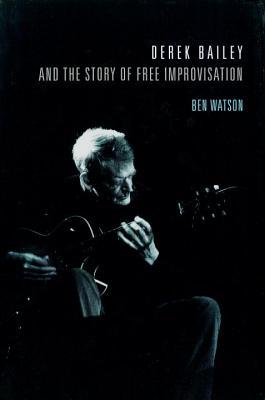
Ben Watson: Derek Bailey and the Story of Free Improvisation
"When somebody says they would rather work in a factory than play music that they don't like or don't believe in, the answer's obvious. It means they've never worked in a factory."
Improvisation is revealed as the kernel of the revolutionary idea: when we have nothing to lose and nothing to hide, the future can be improvised.
The musicians played like lovers stunned by each other’s presence.
The best improvisers are not merely leaders or followers—they are both.
“There’s a certain sound, for instance, which is produced by a saxophone when his soul is being stirred, which freezes me to the balls.”
Labels:
Ben Watson,
Derek Bailey,
Free Improvisation,
Music,
UK
Monday, 18 May 2015
David Stubbs: Future Days: Krautrock and the Building of Modern Germany
In order to invent anew, it was necessary... to reject Anglo-American dominance by drawing from it.
The convulsive vacillation in Krautrock between the axes of noise and beauty, metal and nature speaks about trauma and healing, destruction and rebirth, but at a subliminal, unspoken level.
"Music is just notes. What you speculate beyond that is pure nonsense."
- Klaus Schulze
"He used to dance to our music in a very extreme fashion. Once I saw him at the front of the stage with this naked old woman and he was shoving his Vaselined finger in and out of her backside to the rhythm of the music while ringing a bell at the same time."
- Chris Karrer
Labels:
David Stubbs,
Future Days,
Germany,
Krautrock,
Music,
UK
Sunday, 22 February 2015
Greil Marcus: Lipstick Traces: A Secret History of the Twentieth Century
Today, so many years later, the shock of punk is that every good punk record can still sound like the greatest thing you've ever heard. "A Boring Life," "One Chord Wonders," X-ray Spex's "Oh Bondage Up Yours!," the Sex Pistols' singles, the Clash's "Complete Control"—the power in these bits of plastic, the tension between the desire that fuels them and the fatalism waiting to block each beat, the laughter and surprise in the voices, the confidence of the music, all these things are shocking now because, in its two or three minutes, each is absolute. You can't place one record above the other, not while you're listening; each one is the end of the world, the creation of the world, complete in itself. Every good punk record made in London in 1976 or 1977 can convince you that it's the greatest thing you've ever heard because it can convince you that you never have to hear anything else as long as you live—each record seems to say everything there is to say. For as long as the sound lasts, no other sound, not even a memory of any other music, can penetrate.
What remains irreducible about this music is its desire to change the world. The desire is patent and simple, but it inscribes a story that is infinitely complex—as complex as the interplay of the everyday gestures that describe the way the world already works. The desire begins with the demand to live not as an object but as a subject of history—to live as if something actually depended on one's actions—and that demand opens onto a free street. Damning God and the state, work and leisure, home and family, sex and play, the audience and itself, the music briefly made it possible to experience all those things as if they were not natural facts but ideological constructs: things that had been made and therefore could be altered, or done away with altogether. It became possible to see those things as bad jokes, and for the music to come forth as a better joke. The music came forth as a no that became a yes, then a no again, then again a yes: nothing is true except our conviction that the world we are asked to accept is false. If nothing was true, everything was possible. In the pop milieu, an arena maintained by society at large both to generate symbols and to defuse them, in the only milieu where a nobody like Johnny Rotten had a chance to be heard, all rules fell away. In tones that pop music had never produced, demands were heard that pop music had never made.
Labels:
Greil Marcus,
Lipstick Traces: A Secret History of the Twentieth Century,
Music,
Politics,
Situationism,
USA
Thursday, 29 September 2011
Peter Shapiro: Turn the Beat Around: The Secret History of Disco
Peter Shapiro is a regular Wire magazine contributor, particularly on US House and Techno and this book had long appealed, but I borrowed it from the library on a whim after enjoying Simon Reynold's Retromania so much and wanting to return to music writing. Turn the Beat Around doesn't disappoint either, offering a fascinating 'secret' history of what the publishers describe as a much maligned genre, but from where I sit nowadays that's hardly the current perception.
Interesting was Shapiro's analyses of disco's early beginnings in German youth rebelling against the conformity of Nazi Youth, then through Parisian post-war underground clubs then onto gay New York. The image of Bette Midler singing while a semi-clad Barry Manilow tickled the ivories in an underground spa was wonderful, and hedonistic anecdotes of crazed activities in clubs, discos and makeshift venues of all stripes abound. Shapiro too is great on the music, and I'll xerox the extensive discography before I return it to the library, falling apart and missing pages.
I've started listening to the Disco Discharge series of compilations through Strut and they're wonderful. There's around 25 hours of material on the three sets of series so a lot to wade through.
Interesting was Shapiro's analyses of disco's early beginnings in German youth rebelling against the conformity of Nazi Youth, then through Parisian post-war underground clubs then onto gay New York. The image of Bette Midler singing while a semi-clad Barry Manilow tickled the ivories in an underground spa was wonderful, and hedonistic anecdotes of crazed activities in clubs, discos and makeshift venues of all stripes abound. Shapiro too is great on the music, and I'll xerox the extensive discography before I return it to the library, falling apart and missing pages.
I've started listening to the Disco Discharge series of compilations through Strut and they're wonderful. There's around 25 hours of material on the three sets of series so a lot to wade through.
Labels:
Disco,
Music,
Peter Shapiro,
Turn the Beat Around
Tuesday, 6 September 2011
Wesley Stace: Charles Jessold Considered As A Murderer
I can't recall where I'd read a recommendation for Wesley Stace's Charles Jessold Considered As A Murderer but it was from some reputable blog, with the line that it was ideally suited to music lovers. Well I'm one of those I thought, but alas, not quite. Stace's protagonist is Charles Jessold, a young up and coming English composer interested in English music, especially traditional folk forms, and furthering English music on the world stage. Stace creates an eloquent and convincing voice in critic Shepherd (his name a rather obvious pun) but the narrative is too straightforward and nationalistic (albeit satirically - reminded of too many unpleasant Harold Moores customers and Radio 3 programs), the links with Gesualdo too obvious, and the terrain too familiar and conventionally explored. It remains unfinished.
Sunday, 4 September 2011
Simon Reynolds: Retromania
I'm fascinated by the current state of music and how its production and reception have changed since the internet came and fucked everything over. Sure, there have been benefits, but try finding me one person as excited by music now as they were ten years ago. Or, as Reynolds puts it - play me one piece of music from the 2000s that doesn't sound like it could have come from the 1990s.
Retromania explores all the obvious issues affecting music and popular culture - the interweb, file sharing, Youtube, sampling, pastiche, irony, etc etc etc. but many beyond these, and points to a widespread rejection of the new and the exciting that dates back to the late sixties. Despite Reynolds' final note of optimism, his declaration that he remains a committed modernist futurist and holds out hope for change, Retromania paints a bleak, largely hopeless picture. I'd not expected anything else, but just how much we're locked into the past hadn't completely registered. The book's real message is that the West's time has past, that we're in the midst of the decline and fall, that 'It's time for the West to rest'. Reynolds looks instead to the prospect of other powers taking charge - China and India - and developing new forward thinking approaches to art and cultural production. But even this is merely glanced at, and anyone even slightly aware of the way these two countries are pursuing capitalist greed will not see much hope in the future being in their hands.
Unlike the society he critiques, Retromania keeps expanding and updating itself, of sorts. Reynold's essay in the Wire some months back kicked it off, and his final post for Bruce Davison's Wired blog looks at hyperstasis and contemporary classical composition (and other genres - heck, aren't they they all interchangeable in this polystylistic world?).
Retromania explores all the obvious issues affecting music and popular culture - the interweb, file sharing, Youtube, sampling, pastiche, irony, etc etc etc. but many beyond these, and points to a widespread rejection of the new and the exciting that dates back to the late sixties. Despite Reynolds' final note of optimism, his declaration that he remains a committed modernist futurist and holds out hope for change, Retromania paints a bleak, largely hopeless picture. I'd not expected anything else, but just how much we're locked into the past hadn't completely registered. The book's real message is that the West's time has past, that we're in the midst of the decline and fall, that 'It's time for the West to rest'. Reynolds looks instead to the prospect of other powers taking charge - China and India - and developing new forward thinking approaches to art and cultural production. But even this is merely glanced at, and anyone even slightly aware of the way these two countries are pursuing capitalist greed will not see much hope in the future being in their hands.
Unlike the society he critiques, Retromania keeps expanding and updating itself, of sorts. Reynold's essay in the Wire some months back kicked it off, and his final post for Bruce Davison's Wired blog looks at hyperstasis and contemporary classical composition (and other genres - heck, aren't they they all interchangeable in this polystylistic world?).
Subscribe to:
Posts (Atom)